From our hives in Decatur, Tennessee Call or text (423) 920-1501
PA’S HONEYFROM HIVE TO HOME

100% PURE HONEY · DECATUR, TN

A little Tennessee.
A whole lot of Pa.

Honey from our hives, with a name chosen by the grandchildren who love it most.

1 lb jar · $18Cash or Venmo

Two jars for $34 · Three or more for $16 each

Contact Pa for current availability and purchase arrangements.

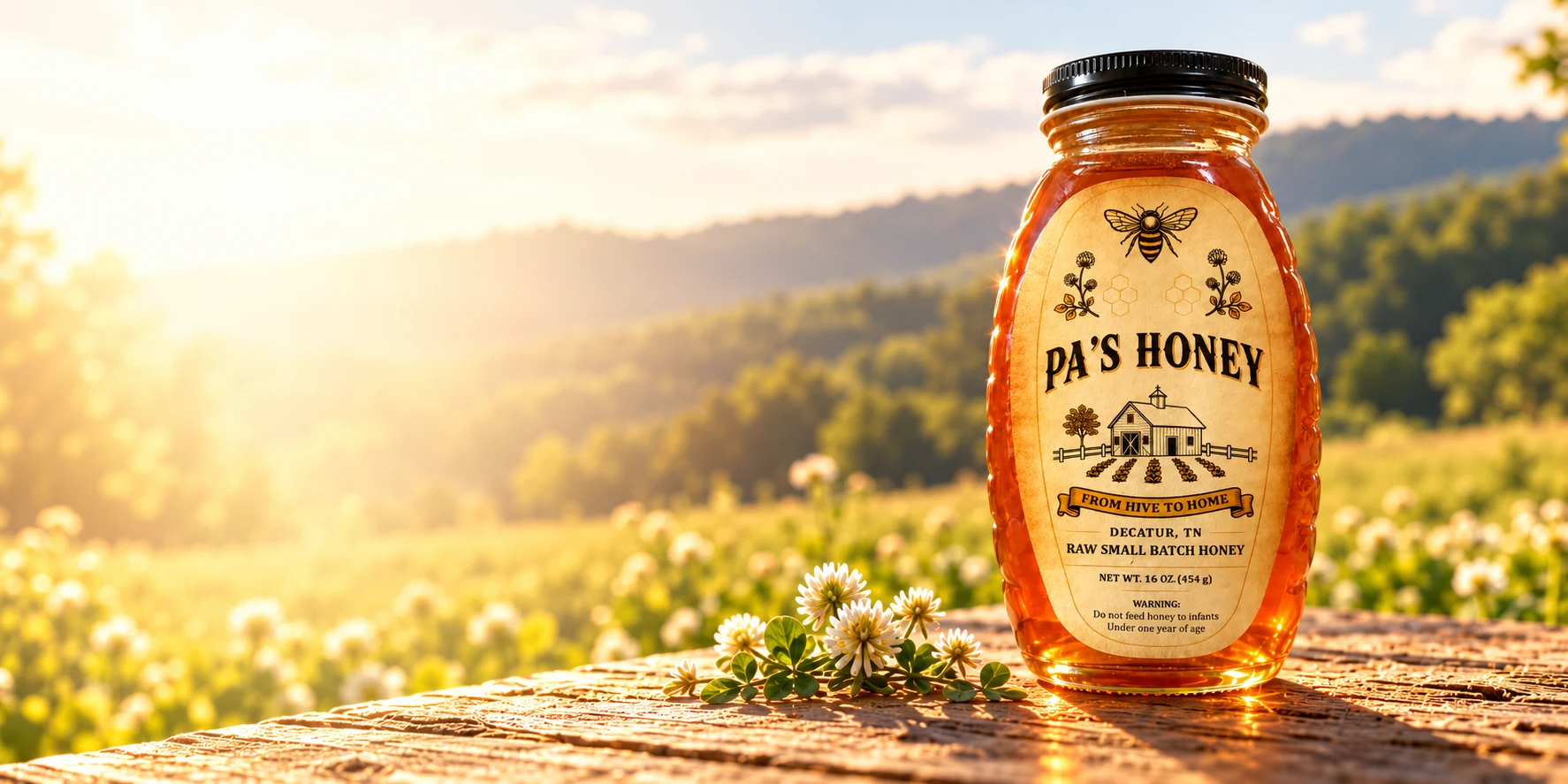
A jar of Pa’s Honey with its parchment farm label, beside a sunlit window
FROM HIVE TO HOME DECATUR, TENNESSEE
Rooted in DecaturA family nameHoney from our hives

THE NAME SAYS IT ALL

To them, I’m Pa.
So this is Pa’s Honey.

Pa’s grandchildren wearing beekeeping suits outdoors, with their faces blurred for privacy
The grandchildren behind the name.

My grandchildren call me Pa. When it came time to name my honey, they couldn’t understand why I would call it anything else. To them, it was already Pa’s Honey.

They look forward to the harvest every year. My granddaughter loves the honey so much that the only thing she wanted for her birthday was honey!

That’s what makes this personal for me. I love tending the bees, and sharing their honey with my grandchildren makes the work even more meaningful. Every jar carries that family connection.

Pa’s Honey · Decatur, Tennessee

Get to know the beekeeper

Wooden frames filled with capped honey from Pa’s Honey
A look at the harvest, before it reaches the jar.

OUR HONEY

It starts
in the hive.

Our honey is 100% pure honey. We never heat it and strain it only enough to remove bee particles and wax.

Our current offering is a 1 lb jar, from our hives in Decatur, Tennessee.

1 lb / 16 oz$18

Share a little sweetness. Two jars are $34, and three or more are $16 each.

Pay with cash or Venmo. Call or text to arrange your purchase.

Call Pa

A note for families: Do not feed honey to children under one year of age.

MEET THE BEEKEEPER

A new way
to keep serving.

Pa wearing his beekeeping jacket with the veil pulled back
Pa, the beekeeper behind every jar.
“I never get tired of observing the bees.”

From Navy service to a new purpose

I served in the Navy for about 14 years, until a back injury prevented me from completing the 20 years I had planned. As a boatswain’s mate on a supply ship, I participated in Kuwait Liberation, Desert Shield, and Desert Storm. We transferred bombs, food, fuel, and other supplies to ships, often working more than 16 hours a day and doing it all again the next day.

The class I wished met more often

My interest in beekeeping began when I read about Heroes to Hives in a VA newsletter. It was a free Michigan State University program for veterans. The nine month program covered beekeeping extensively. I enjoyed it so much that I was disappointed the class only met once a month.

After the program ended, I helped a local beekeeper with her bees in Washington State to gain practical experience. She also let me keep a couple of my own hives on her property. That generosity helped me get started.

Putting down roots in Tennessee

When I moved to Tennessee, I started again. By 2026, I had grown to 15 hives. I love tending the bees, even when a beekeeping jacket makes the Tennessee heat challenging. Working with them takes calm and focus, and I become completely absorbed in what I’m doing.

I’m always reading, researching, and observing the bees. Their society fascinates me. My back still presents challenges, but I can’t think of anything I would rather do.

I want to give back after serving. Caring for bees and supporting pollinators gives me an opportunity to make a positive contribution. That purpose is at the heart of Pa’s Honey.

Read about Heroes to Hives at Michigan State University

LOCAL ROOTS. SIMPLY HANDLED.

Why choose
local, raw honey?

A taste of the season

Honey’s flavor and color reflect the flowers the bees visit. They can vary with the season and nectar sources, giving each harvest its own character.

A simple process

At Pa’s Honey, raw means we never heat the honey. We strain it only enough to remove bee particles and wax. You’re buying 100% pure honey.

Know your beekeeper

Buy honey from our hives in Decatur and speak directly with the person caring for the bees. Your purchase supports a local beekeeper and the work behind each jar.

Two jars of honey on a weathered wooden table outdoors, one golden and one darker amber
Two shades of honey from Pa’s Honey.

EVERY HARVEST HAS ITS OWN CHARACTER

Different flowers.
Different shades.

The flowers our bees visit change through the season, and the honey changes with them.

Lighter honey: spring into early summer

Clover contributes heavily to this honey’s nectar sources. It tends to taste sweeter than our darker summer honey.

Darker honey: summer

A wider variety of nectar sources gives our summer honey its darker shade and stronger flavor.

Both are 100% pure honey from our hives, never heated and strained only enough to remove bee particles and wax.

A JAR FOR YOUR HOME

How to buy.

Our honey comes in 1 lb jars: one for $18, two for $34, or three or more for $16 each. Every purchase is arranged directly with Pa.

  1. Call or text Pa.

    Let Pa know how many jars you would like.

  2. Confirm the details.

    Check current availability and agree on the arrangements for your purchase.

  3. Pay with cash or Venmo.

    Pa will confirm payment details when you arrange your purchase.

Decatur and our neighboring counties

Pa’s Honey is based in Decatur, in Meigs County, Tennessee. We welcome honey inquiries from customers in Meigs, Roane, McMinn, Bradley, Hamilton, and Rhea counties. Call or text Pa to discuss availability and purchase arrangements for your location.

Find Pa locally

You can find me at the VFW in Decatur, Tennessee, on game nights and at the monthly breakfast. Stop by to talk honey, or call or text ahead to arrange your purchase.

Text Pa to arrange a purchase

Prefer to call? (423) 920-1501

GOOD TO KNOW

Caring for your honey.

Why has my honey crystallized?

Honey can naturally form sugar crystals and become thicker or grainy. Crystallization by itself does not mean your honey has spoiled. You can enjoy its thicker texture.

How should I store my honey?

For storage at home, we recommend a clean, dry glass jar with a tight-fitting lid. Keep it at room temperature in a pantry or cupboard, away from direct sunlight and heat from the stove or oven. This helps preserve its flavor, color, and quality. Refrigeration can make honey crystallize more quickly.

Why might there be a little foam on my honey?

Small air bubbles can enter honey during extracting, straining, and filling jars. As that trapped air rises, it can form a light layer of foam on the surface. A little surface foam alone does not mean the honey is fermenting.

Fermentation involves yeasts producing new gas. Ongoing bubbling or expanding foam, especially with a sour or alcoholic smell, deserves attention. If you notice these changes or are unsure about your jar, stop using it and contact Pa.

Read Michigan State University Extension’s explanation of air bubbles and honey foam.

Why does honey’s water content matter?

Our 2026 honey has been checked and measures 17% to 18% water content. Checking moisture is an important part of caring for the harvest.

Bees naturally reduce the water in nectar as they turn it into honey. For good keeping quality, a practical target is about 18% water or less.

Above 18%, the risk of fermentation increases, depending on the yeasts present and storage conditions. Around 20% or higher is particularly concerning for honey stored at room temperature. These percentages are guides, rather than an exact point at which every jar will ferment.

Too much water allows naturally occurring yeasts to turn sugars into alcohol and gas. Fermentation can cause ongoing bubbling and a sour or alcoholic smell. A little surface foam from trapped air, on its own, does not mean fermentation. Normal crystallization is also a separate process.

Keep the lid tightly closed and use a clean, dry spoon: honey can absorb moisture from the air. If you suspect your honey is fermenting, stop using it and contact Pa.

Read more in Southern Cross University’s honey fermentation guide.

Is Pa’s Honey heated or finely filtered?

No. Our honey is 100% pure honey. We never heat it and strain it only enough to remove bee particles and wax.

Why do people choose raw, local honey?

Raw, local honey brings together natural sweetness, seasonal flavor, and a connection to the flowers and beekeeper close to home. Honey naturally contains plant compounds with antioxidant activity, and many people enjoy it in warm tea and other comforting foods as part of their everyday wellness routine.

Pa’s Honey is 100% pure honey from our hives, never heated and strained only enough to remove bee particles and wax. You know where it comes from and how it is handled, with the character of each harvest kept at the heart of every jar.

A spoonful in your morning tea, a drizzle over yogurt, or a little sweetness at the end of the day: simple ways to bring honey into the foods and routines you enjoy. Choosing local also supports the beekeeper caring for the bees in your community.

Explore the research on honey’s naturally occurring plant compounds and antioxidant activity.

Have a question about your jar? Text Pa or call (423) 920-1501.

MORE THAN A JAR OF HONEY

A place for
the pollinators.

Honey bees, native bees, butterflies, and other pollinators help many flowering plants produce seeds and fruit. Their work supports food crops, gardens, and the plants wildlife depend on.

Honey bees covering wooden frames inside an open hive
A closer look at the colonies behind every jar.

Every jar helps keep the work going

The price of local honey reflects far more than the jar on your table. Behind it are hive equipment, bees and queens, jars and labels, and many hours spent tending colonies, harvesting, and preparing the honey.

Colony losses make that work harder. Replacing lost colonies takes time and resources that could otherwise go toward growing the apiary. A difficult year can mean rebuilding just to keep going.

I keep bees because I love the work and believe it matters. When you buy directly from Pa’s Honey, you help support that care, the next harvest, and a local beekeeper’s commitment to the bees.

Why rebuilding colonies is part of beekeeping

Preliminary U.S. Beekeeping Survey results estimated annual losses of 39.9% of managed honey bee colonies from April 2025 to April 2026. The previous year’s estimate was 55.6%. Losses vary by beekeeper and year, but these figures show how much rebuilding the work can involve.

These are colony mortality estimates. Beekeepers can replace colonies during the year, so the loss figures do not represent an equivalent decline in the total number of managed colonies.

Read the 2025–2026 survey results and 2024–2025 survey results.

Make room for flowers

Native plants that bloom at different times of year provide food for pollinators through the growing season. A garden can help both managed honey bees and wild pollinators.

Learn about pollinators from the USDA
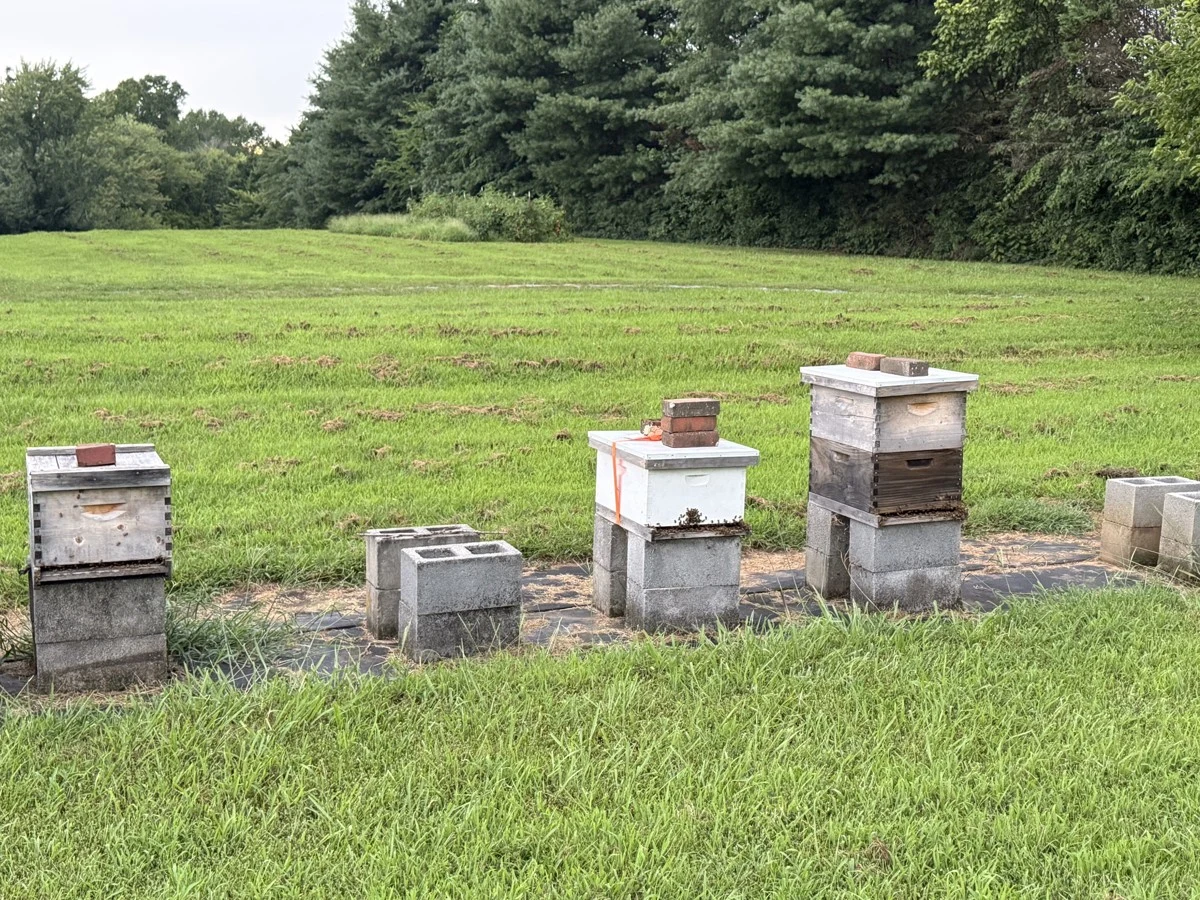
Pa’s Honey hives beside a green field and wooded tree line

MAKE ROOM FOR THE BEES

Have land?
Host an apiary.

We’re looking for suitable properties within 10 miles of Decatur. We begin with a couple of colonies, with planned growth to as many as 30 hives.

Depending on the harvest, hosts may receive a gift of 1 to 3 pounds of honey per property, each year. Bees may also help pollinate suitable crops on your land.

Discuss your property
01

Reliable access

Vehicle access to the hives at any time throughout the year.

02

Clean water nearby

A dependable, clean, year round water source near the apiary.

03

Room to grow

Hosts acknowledge planned growth from a couple of colonies to up to 30 hives.

Hosting responsibilities and relocation

Pa’s Honey manages the hives. All colonies, equipment, and hive products remain the property of Pa’s Honey. Landowners must not open, move, or disturb the hives.

Protecting the bees. Give Pa’s Honey at least three days’ advance notice of planned chemical spraying or other activities that could harm the bees.

Planning for removal. Established colonies can be difficult to relocate. Give at least two weeks’ notice when requesting removal. Routine removal is scheduled in winter and depends on suitable weather and colony conditions, including bees clustered outside the hives, known as bearding. Notice does not guarantee removal within two weeks or on a specific date.

The honey gift depends on harvest and is not guaranteed. Hosting does not guarantee a particular crop yield. Final hosting arrangements will be set out in an agreement.

LEARN WITH PA

Your hives.
Your questions.
Time with Pa.

When club meetings don’t fit your schedule, individual paid mentorship gives you dedicated time to focus on your own bees.

Arrange a visit to your apiary for individual attention, guidance on your setup, and seasonal questions specific to your hives and experience.

Beekeepers in Meigs, Roane, McMinn, Bradley, Hamilton, and Rhea counties are welcome to ask about mentorship. Visits depend on your location and Pa’s availability.

Call or text Pa to discuss your location, learning goals, availability, and session pricing.

Discuss a mentorship visit
A close view of honey bees on a frame of comb

GROWING WITH THE SEASONS

More to come
from Pa’s Honey.

In 2026, Pa’s Honey has grown to 15 hives. My long term goal is around 125 hives across the business, so I can share more products from the bees. Today, our offering is 1 lb jars of pure honey. As we grow, we plan to offer more from our hives and more ways to learn about the bees.

Two honey bee hives standing beside a green field and wooded tree line
Growing the apiary, one season at a time.
PLANNED FOR 2027

Pollen and comb honey

We’re planning to offer pollen and comb honey in 2027. Availability will depend on the season and harvest.

FUTURE PLANS

A shop and more to explore

Future plans include an online shop, recipes, and educational articles about honey and beekeeping.

IN DEVELOPMENT · BEGINNING BEEKEEPERS WANTED

New to beekeeping?
Help shape Colony Keeper.

Colony Keeper is being designed to help you keep inspection records, notes, and photos together for each hive, track changes over time, and plan what needs attention next. The phone app is intended for quick recording during hive visits, with desktop review and planning between visits.

I’m looking mainly for beginning beekeepers to help test it. You don’t need years of experience. Your questions and feedback as you learn will help shape the product.

This first version focuses on beginning beekeepers. A version for professional beekeepers is planned for later.

In return for your testing and feedback, you’ll receive 90 days of access. The trial may be extended based on your feedback. Call or text Pa to volunteer and discuss testing availability and next steps.

Volunteer to test Colony Keeper
IN PLANNING

Sharing the world of bees with students

I hope to visit local schools to talk about pollinators, beekeeping, and the important role pollinators play in our food supply. I’m also working toward getting an observation hive to bring on school visits, so students can see the bees at work.

School visits and classroom arrangements are still in planning.

These are future plans. For current honey availability, call or text Pa.

LET’S TALK HONEY

Good things start
with a conversation.

Honey availability, apiary hosting, or beekeeping mentorship.
Call or text Pa at (423) 920-1501.

FOR SPECIALTY STORES

Bring Pa’s Honey
to your shelves.

We welcome inquiries from specialty stores interested in carrying Pa’s Honey. Call or text Pa to discuss wholesale pricing, order quantities, and availability.

Ask about carrying our honey