PA’S HONEY · DECATUR, TENNESSEE
Raw local honey
in Decatur, TN.
100% pure honey from our hives, never heated and strained only enough to remove bee particles and wax.
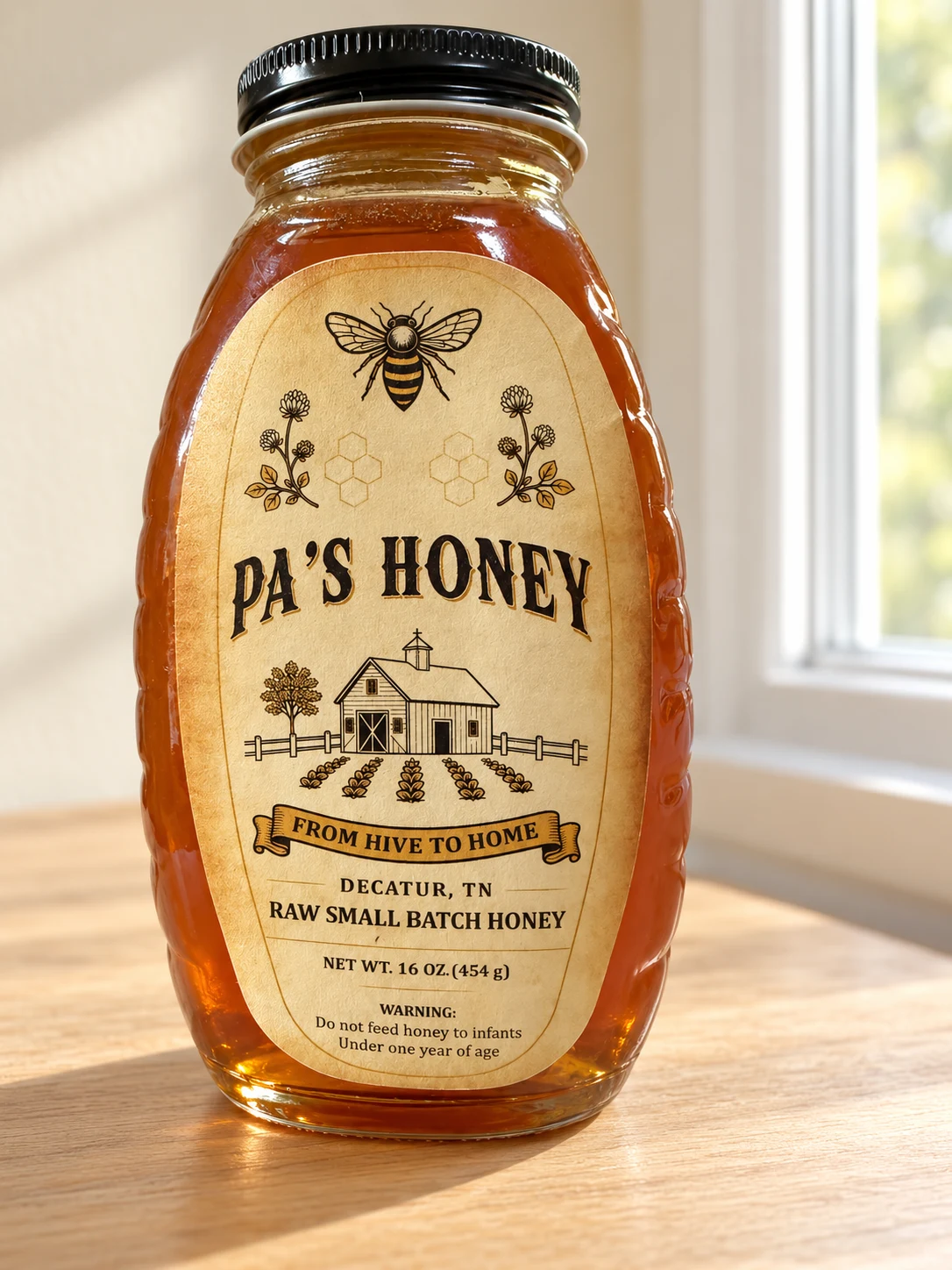
FROM OUR HIVES TO YOUR HOME
Buy directly
from Pa.
Our honey comes in 1 lb jars: one for $18, two for $34, or three or more for $16 each. Every purchase is arranged directly with Pa.
A note for families: Do not feed honey to children under one year of age.
Local roots.
Simply handled.
At Pa’s Honey, raw means we never heat the honey. We strain it only enough to remove bee particles and wax. You’re buying 100% pure honey.
Decatur and our neighboring counties
Pa’s Honey is based in Decatur, in Meigs County, Tennessee. We welcome honey inquiries from customers in Meigs, Roane, McMinn, Bradley, Hamilton, and Rhea counties. Call or text Pa to discuss availability and purchase arrangements for your location.
Find Pa locally
You can find me at the VFW in Decatur, Tennessee, on game nights and at the monthly breakfast. Stop by to talk honey, or call or text ahead to arrange your purchase.
LOCAL ROOTS. SIMPLY HANDLED.
Why choose
local, raw honey?
A taste of the season
Honey’s flavor and color reflect the flowers the bees visit. They can vary with the season and nectar sources, giving each harvest its own character.
A simple process
At Pa’s Honey, raw means we never heat the honey. We strain it only enough to remove bee particles and wax. You’re buying 100% pure honey.
Know your beekeeper
Buy honey from our hives in Decatur and speak directly with the person caring for the bees. Your purchase supports a local beekeeper and the work behind each jar.
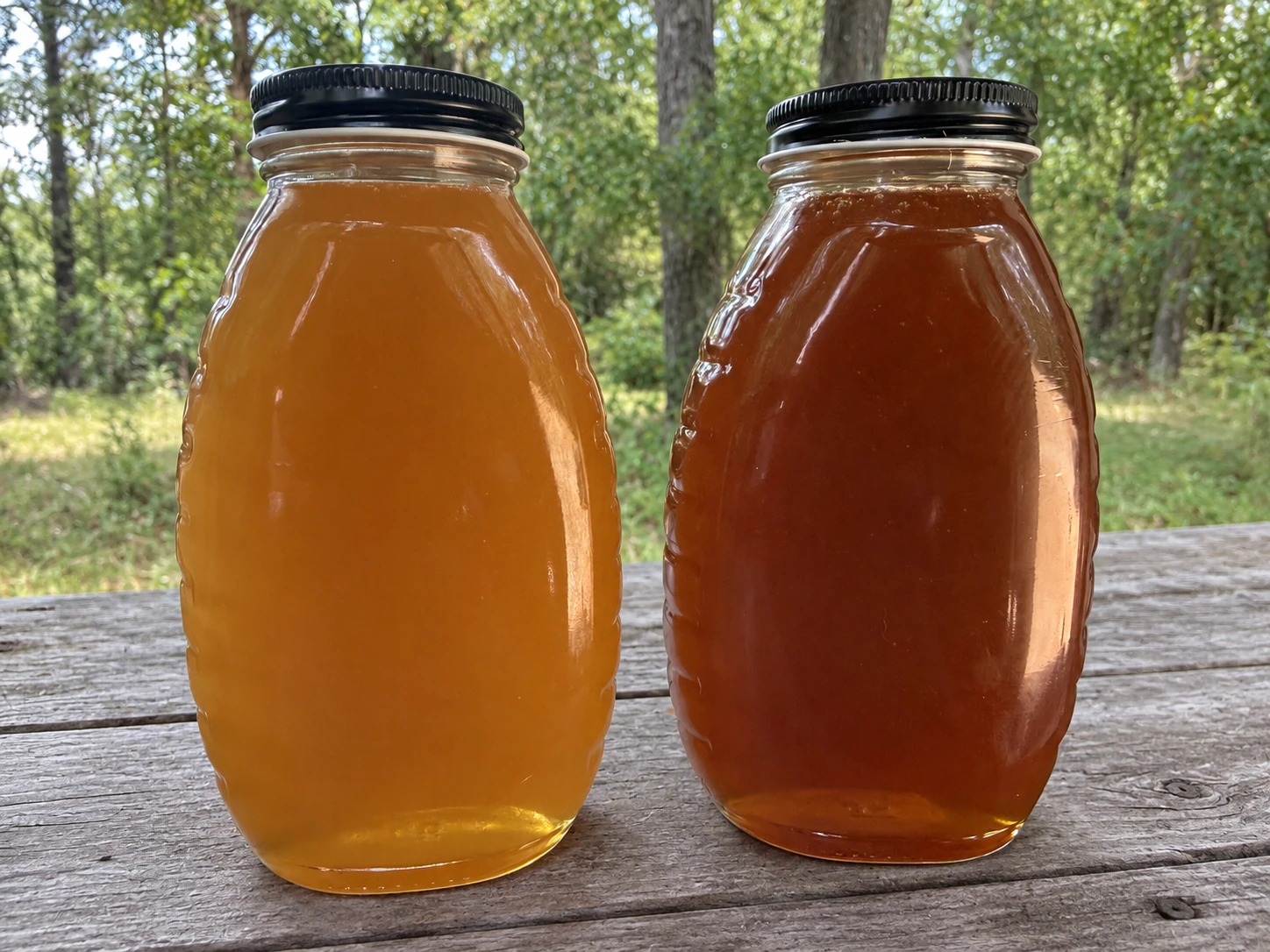
EVERY HARVEST HAS ITS OWN CHARACTER
Different flowers.
Different shades.
The flowers our bees visit change through the season, and the honey changes with them.
Lighter honey: spring into early summer
Clover contributes heavily to this honey’s nectar sources. It tends to taste sweeter than our darker summer honey.
Darker honey: summer
A wider variety of nectar sources gives our summer honey its darker shade and stronger flavor.
Both are 100% pure honey from our hives, never heated and strained only enough to remove bee particles and wax.
GOOD TO KNOW
Caring for your honey.
Why has my honey crystallized?
Honey can naturally form sugar crystals and become thicker or grainy. Crystallization by itself does not mean your honey has spoiled. You can enjoy its thicker texture.
How should I store my honey?
For storage at home, we recommend a clean, dry glass jar with a tight-fitting lid. Keep it at room temperature in a pantry or cupboard, away from direct sunlight and heat from the stove or oven. This helps preserve its flavor, color, and quality. Refrigeration can make honey crystallize more quickly.
Why might there be a little foam on my honey?
Small air bubbles can enter honey during extracting, straining, and filling jars. As that trapped air rises, it can form a light layer of foam on the surface. A little surface foam alone does not mean the honey is fermenting.
Fermentation involves yeasts producing new gas. Ongoing bubbling or expanding foam, especially with a sour or alcoholic smell, deserves attention. If you notice these changes or are unsure about your jar, stop using it and contact Pa.
Read Michigan State University Extension’s explanation of air bubbles and honey foam.
Why does honey’s water content matter?
Our 2026 honey has been checked and measures 17% to 18% water content. Checking moisture is an important part of caring for the harvest.
Bees naturally reduce the water in nectar as they turn it into honey. For good keeping quality, a practical target is about 18% water or less.
Above 18%, the risk of fermentation increases, depending on the yeasts present and storage conditions. Around 20% or higher is particularly concerning for honey stored at room temperature. These percentages are guides, rather than an exact point at which every jar will ferment.
Too much water allows naturally occurring yeasts to turn sugars into alcohol and gas. Fermentation can cause ongoing bubbling and a sour or alcoholic smell. A little surface foam from trapped air, on its own, does not mean fermentation. Normal crystallization is also a separate process.
Keep the lid tightly closed and use a clean, dry spoon: honey can absorb moisture from the air. If you suspect your honey is fermenting, stop using it and contact Pa.
Read more in Southern Cross University’s honey fermentation guide.
Is Pa’s Honey heated or finely filtered?
No. Our honey is 100% pure honey. We never heat it and strain it only enough to remove bee particles and wax.
Why do people choose raw, local honey?
Raw, local honey brings together natural sweetness, seasonal flavor, and a connection to the flowers and beekeeper close to home. Honey naturally contains plant compounds with antioxidant activity, and many people enjoy it in warm tea and other comforting foods as part of their everyday wellness routine.
Pa’s Honey is 100% pure honey from our hives, never heated and strained only enough to remove bee particles and wax. You know where it comes from and how it is handled, with the character of each harvest kept at the heart of every jar.
A spoonful in your morning tea, a drizzle over yogurt, or a little sweetness at the end of the day: simple ways to bring honey into the foods and routines you enjoy. Choosing local also supports the beekeeper caring for the bees in your community.
Explore the research on honey’s naturally occurring plant compounds and antioxidant activity.
Have a question about your jar? Call or text Pa.
LET’S TALK
Start with a conversation.
Call or text Pa to discuss your questions and make arrangements.